Pain That Won’t Go Away After an Injury? What to Know About CRPS
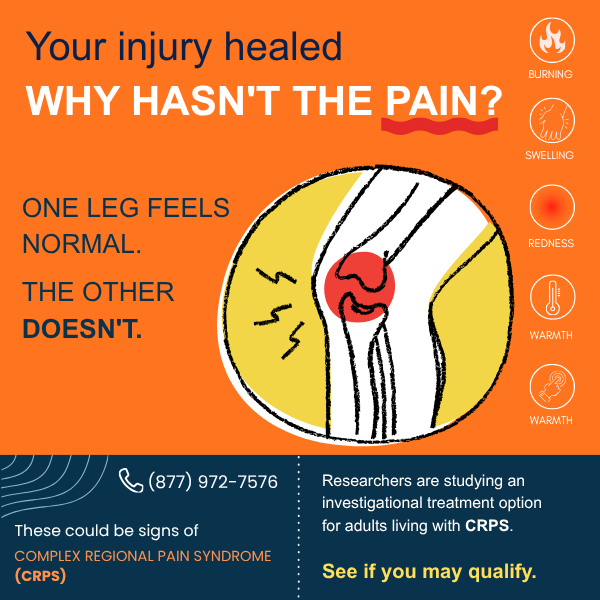
An injury heals—but the pain doesn’t.
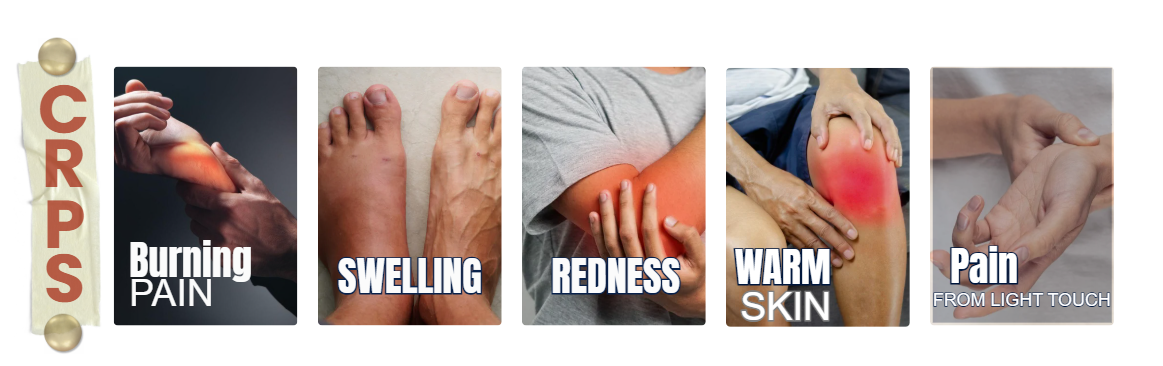
Instead, the affected arm or leg continues to hurt. The area may feel unusually sensitive, swollen, hot or cold, and even a light touch can become uncomfortable.
While persistent pain after an injury can have many causes, these symptoms can sometimes occur with a condition called Complex Regional Pain Syndrome (CRPS).
What Is CRPS?
Complex Regional Pain Syndrome is a form of chronic pain that typically affects an arm or leg.
It often develops following an injury, surgery, or other physical trauma.
One characteristic of CRPS is that the pain may be more severe or last longer than would typically be expected from the original injury.
The exact cause of CRPS is not completely understood.
What Does CRPS Feel Like?
CRPS can look and feel different from person to person.
Possible symptoms include:
- Continuous burning or throbbing pain
- Extreme sensitivity to touch or cold
- Swelling
- Changes in skin temperature
- Changes in skin color
- Changes in skin texture
- Joint stiffness
- Muscle weakness
- Difficulty moving the affected limb
Some people may notice that the affected area feels warmer or colder than the opposite limb.
Changes in hair or nail growth can also occur.
Why Can Something as Light as Touch Hurt?
One particularly challenging symptom of CRPS can be increased sensitivity.
Touch that would normally not be painful—such as clothing, a bedsheet, or light contact with the skin—may feel extremely uncomfortable.
CRPS involves changes in how the nervous system processes signals, although researchers are still working to fully understand why the condition develops.
Does CRPS Always Happen After a Major Injury?
No.
CRPS can occur after significant trauma such as a fracture, but it has also been associated with surgery, sprains, and other injuries.
The severity of the original injury does not necessarily predict how severe CRPS symptoms may become.
Can CRPS Affect Any Part of the Body?
CRPS most commonly affects a limb—an arm, leg, hand, or foot.
Symptoms usually begin in one affected area, although in some cases they can spread.
The course of the condition can also vary. Some people improve, while others may experience symptoms that persist for months or years.
When Should You Talk to a Healthcare Provider?
Pain after an injury is common and does not automatically mean someone has CRPS.
However, Mayo Clinic recommends seeking medical evaluation for constant, severe limb pain that makes touching or moving the limb difficult or intolerable.
There is no single test that definitively diagnoses CRPS. Evaluation is generally based on symptoms, medical history, and physical examination, with other testing sometimes used to help rule out different conditions.
Research Is Helping Us Learn More About CRPS
Because CRPS remains a complex condition, researchers continue to investigate why it develops and how it may be treated.
Clinical research studies can help evaluate potential new approaches and expand our understanding of chronic pain conditions.
At SCLA Management, we work with clinical research sites across the United States conducting studies across a variety of medical conditions, including CRPS.
Interested in Clinical Research?
If you have been diagnosed with CRPS, you may be eligible for a clinical research study.
Explore our current research opportunities to learn more about studies that may be available near you.
Explore Current Studies
This article is for educational purposes only and is not intended to provide medical advice, diagnosis, or treatment.
Sources
Mayo Clinic — Complex Regional Pain Syndrome: Symptoms & Causes