Frequent Migraines in Children or Teens? Here’s What Parents Should Know
Headaches can happen at any age. But when your child or teenager experiences them repeatedly—or headaches begin interfering with school, sports, sleep, or everyday activities—it may be time to look more closely at what is happening.
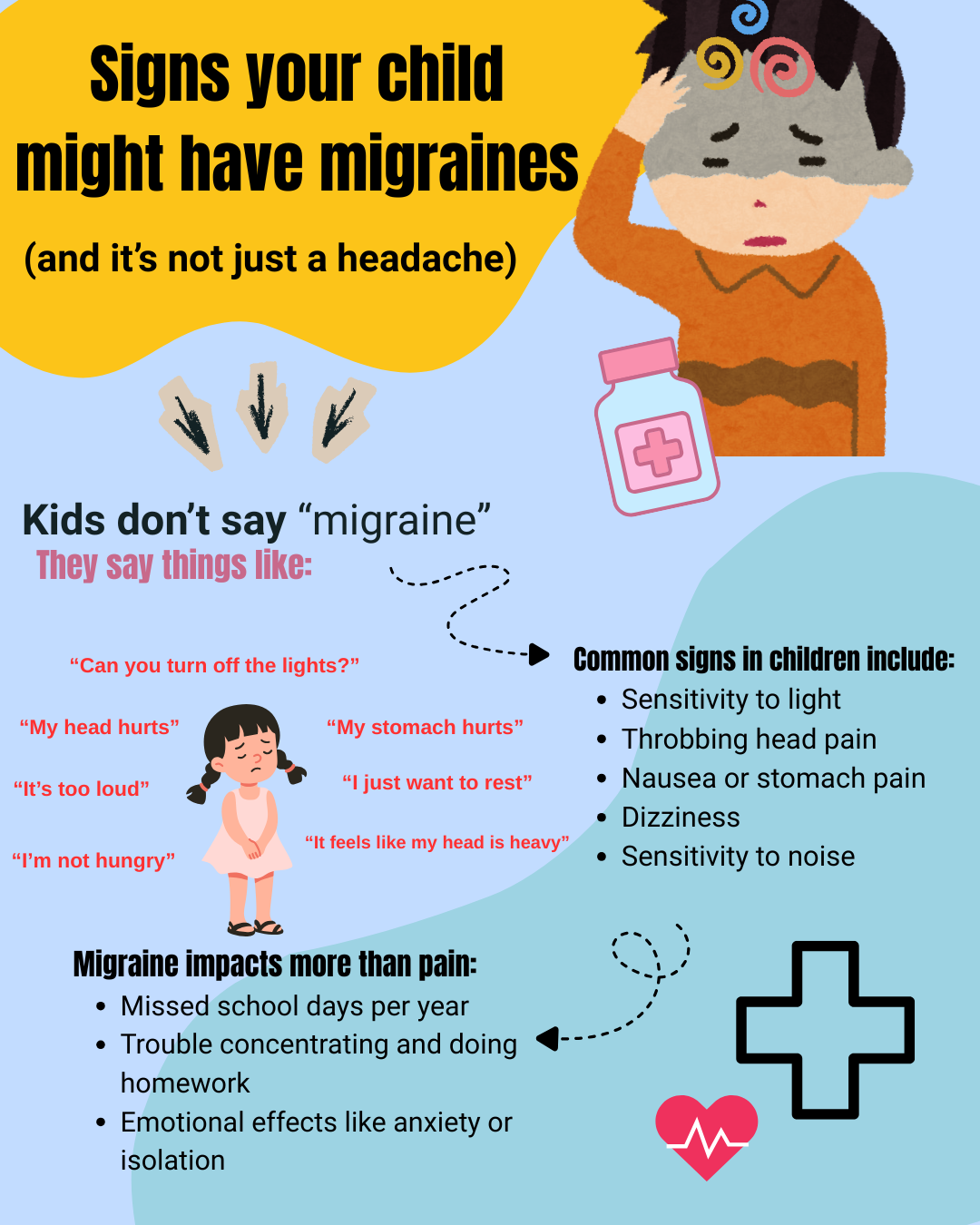
Children and teenagers can experience migraine, and their symptoms don’t always look exactly the same as they do in adults.
Understanding the signs can help parents recognize when recurring headaches deserve further evaluation.
Can Children and Teenagers Really Have Migraines?
Yes.
Migraine can affect people of all ages, including children and adolescents. In fact, migraine attacks can begin during childhood or the teenage years.
Migraine is more than simply a bad headache. It is a neurological condition that can cause head pain along with other symptoms that may interfere with a young person’s daily life.
One challenge is that younger children may have difficulty describing exactly what they are experiencing, making migraine harder for parents to recognize.
What Can Migraine Look Like in Children and Teens?
Migraine symptoms can vary from one child to another.
Common symptoms may include:
- Moderate to severe headache
- Throbbing or pulsing head pain
- Nausea or vomiting
- Stomach pain
- Sensitivity to light
- Sensitivity to sound
- Dizziness or lightheadedness
- Fatigue
- Difficulty concentrating
Some children may simply become irritable, want to lie down, or seek out a quiet or dark room when they don’t feel well.
Unlike the classic one-sided migraine often associated with adults, migraine pain in children can sometimes occur on both sides of the head or across the forehead.
Can Migraine Affect School and Daily Activities?
Yes.
Migraine attacks can make it difficult for a child or teenager to concentrate, participate in class, complete schoolwork, play sports, or attend social activities.
Some young people may miss school because of their symptoms, while others may try to continue their normal routine despite feeling unwell.
For teenagers in particular, migraine can interfere with school, activities, sleep, and friendships.
If recurring headaches are beginning to interfere with your child’s normal activities, that is important information to discuss with a healthcare professional.
What Can Trigger Migraine Attacks?
Migraine triggers aren’t identical for everyone.
For some children and teenagers, changes in everyday routines may contribute to attacks. Potential triggers can include:
- Irregular sleep
- Skipping meals
- Dehydration
- Stress
- Changes in routine
- Certain sensory triggers, such as bright lights or loud sounds
Not every child will have the same triggers, and sometimes an attack may occur without an obvious one.
Keeping track of when headaches occur and what was happening beforehand may help families identify patterns over time.
Should Parents Keep a Headache Diary?
It can be helpful.
If your child experiences recurring headaches, consider keeping track of information such as:
- When the headache started
- How long it lasted
- How severe it was
- Other symptoms that occurred
- Whether your child missed school or activities
- Sleep and meal patterns
- Possible triggers
- Any medication used and how your child responded
A headache diary can give a healthcare provider useful information when evaluating recurring headaches and may help reveal patterns that are difficult to notice otherwise.
When Should You Talk to a Healthcare Provider?
Not every headache is a migraine, and headaches in children can have many different causes.
However, consider discussing your child’s headaches with a healthcare professional if they occur frequently, become more severe, change in pattern, or begin interfering with school or everyday activities.
A healthcare provider can review the child’s symptoms and medical history and determine whether further evaluation is needed.
Research Is Helping Us Learn More About Pediatric Migraine
Researchers continue to study migraine in children and adolescents to better understand the condition and evaluate approaches that may help prevent or manage migraine attacks.
Clinical research studies play an important role in this process.
At SCLA Management, we work with clinical research sites across the United States conducting studies across a variety of medical conditions, including migraine in children and adolescents.
Interested in Clinical Research?
If your child or teenager has been diagnosed with migraine, they may be eligible for a clinical research study.
Explore our current research opportunities to learn more about studies that may be available near you.
Explore Current Studies
This article is for educational purposes only and is not intended to provide medical advice, diagnosis, or treatment. Always speak with a qualified healthcare professional about your child’s symptoms or medical concerns.
Sources
American Migraine Foundation — Migraine in Children
American Migraine Foundation — Migraine in Children
American Migraine Foundation — Migraine 101 for Teens
American Migraine Foundation — Migraine 101 for Teens
American Migraine Foundation — Pediatric Migraine: A Guide for Parents
American Migraine Foundation — Pediatric Migraine: A Guide for Parents
Mayo Clinic — Headaches in Children: Symptoms & Causes
Mayo Clinic — Headaches in Children